Field research · Usability · Interaction concept

Designing a classroom computer as a classroom system.

At Human Factors International, I contributed to India classroom research and an 18-participant usability study for Intel’s Classmate PC program, then authored a 46-page interface concept organized around activity spaces, tags, and a school diary.

Program
Intel Classmate PC and Hawk Peak education experience
Research
India classroom inquiry plus usability sessions in India and China
Participants
18 students, teachers, and IT or computer staff
My evidence
Named study-team member and direct concept author
Concept
Environs, tags, and diary for learning activity
Outcome boundary
Research and concept contribution verified; shipped status unverified

The screen, device, teacher, learner, server, and school workflow all shaped whether the experience could succeed.

The system

A computer inside a living classroom.

The research framed the Classmate PC as one part of a service system. Teachers coordinated activity, students moved between learning tasks, administrators maintained devices, and classroom infrastructure determined what was practical.

Students

Reading, writing, creating, searching, sharing, and moving between activities.

Teachers

Guidance, communication, monitoring, distribution, and classroom control.

IT staff

Setup, updates, storage, recovery, access, and device administration.

Infrastructure

Connectivity, local servers, physical space, ruggedness, and maintenance.

My role

Research participation with direct concept authorship.

The final Hawk Peak report names me as a member of the HFI preparation team. My HFI account is also linked to the companion protocol, India research, findings material, and a classroom-system scenario.

I directly authored the 46-page Classmate PC interface concept. Team materials stay attributed to the team unless the source metadata assigns authorship to me.

01 / Context

Start with classroom practice.

The India research included school leadership, classroom teachers, computer staff, and the technical environment around student devices. It surfaced needs around mobility, touch and writing, ruggedness, screen size, teacher control, local storage, file distribution, collaboration, and maintenance.

This widened the product question. A small laptop interface could be usable in isolation and still create friction across teaching, administration, and shared learning.

02 / Test

Evaluate hardware and software together.

The Hawk Peak study involved 18 participants in India and China: nine students, six teachers, and three IT administrators or computer teachers. Sessions used representative tasks, structured observation, completion criteria, severity ratings, and follow-up questions.

Tasks covered orientation, login, reading, note-taking, drawing, search, web research, moving content between applications, teacher and student collaboration, camera use, tablet mode, and shutdown. Findings spanned physical form, interaction clarity, learning workflow, and classroom coordination.

03 / Concept

Give activity, memory, and context a structure.

I authored an interaction model built around three ideas. Environs organized distinct activities on a constrained screen. Tags connected material across contexts and helped students retrieve assignments, questions, or difficult material. Diary preserved time and activity context in a form inspired by a familiar school tool.

The concept connected a child-centered experience to teacher communication and the wider classroom system. It turned a set of findings into a coherent product hypothesis.

Scope: The archive shows a strong thematic trace from research to concept. Specific decision causality and final product adoption remain unverified.
Working sequence

One case across four scales.

The work moved between the physical device, individual interactions, classroom activity, and the institutional system around it.

  1. Observe the setting

    Study people, tasks, infrastructure, maintenance, and teaching practice around the device.

  2. Test representative work

    Use realistic tasks to see where the physical form and software experience helped or blocked progress.

  3. Synthesize across roles

    Connect student, teacher, and administrator evidence across India and China.

  4. Develop the interaction model

    Translate learning activity and context into Environs, tags, and diary.

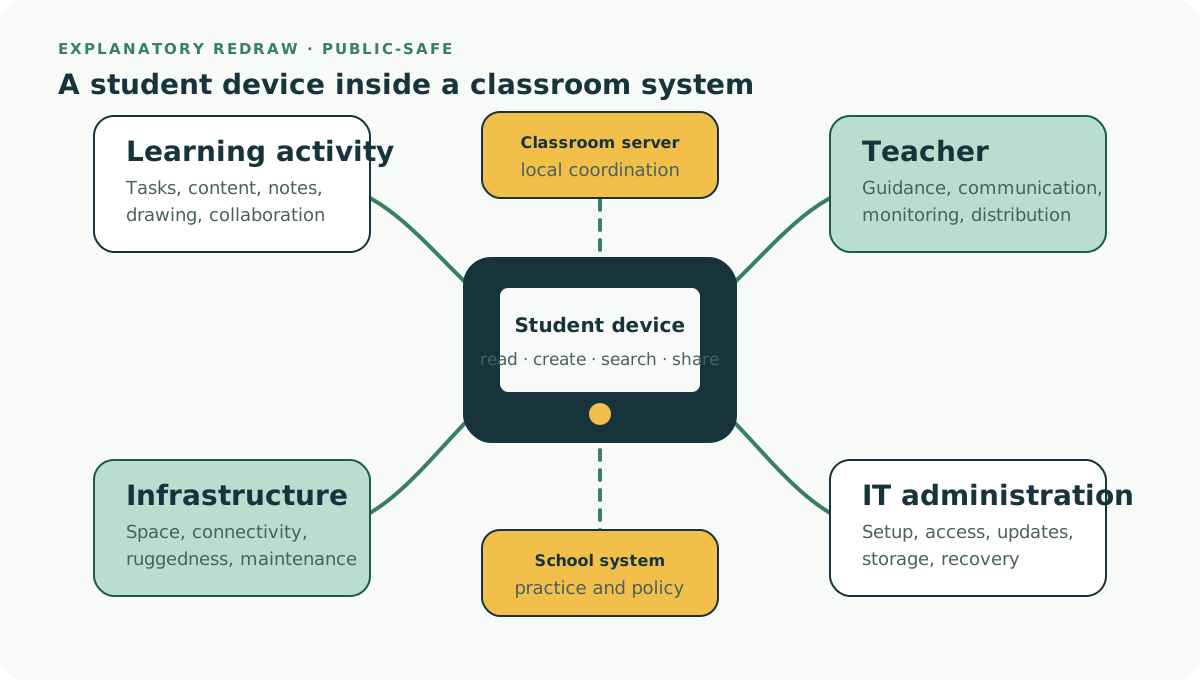
Explanatory redraw

The classroom system.

This original diagram summarizes the research frame without reproducing Intel screens, school details, or participant data.

Pan diagram →Diagram showing the student device connected to learning activities, teachers, classroom server, IT administration, and physical infrastructure.
System frameResearch treated the device as a participant in a classroom workflow, with learning, coordination, and maintenance shaping the experience together.
What the work produced

A traceable research-to-concept record.

The durable result in the archive is the quality and range of the work itself.

Research
Evidence across roles and settings

Students, teachers, administrators, physical form, software, and classroom infrastructure were considered in one program.

Product thinking
Findings at multiple scales

The work connected control-level issues to learning workflows and classroom coordination.

Design
An authored interaction concept

Environs, tags, and diary formed a coherent model for activity and context on a learning device.

Outcome boundary: The source record verifies research and concept contribution. It contains no approved evidence for shipment, adoption, educational impact, or business results.

Specialized products belong to systems of practice.

The Classmate PC work made that principle concrete early in my career. Product quality emerged from the relationship among people, tools, environment, and institutional workflow. That systems orientation continued into my later telecom service design and expert engineering work.

Evidence and privacy notes
  • A private final report names Praneet within the HFI study team.
  • A private 46-page concept deck carries direct Praneet authorship metadata.
  • India research, protocol, findings, and scenario material provide team-level corroboration.
  • HFI’s public client list confirms the organizational relationship with Intel.
  • All source screens, participant information, school identities, and client material remain private. The diagram on this page is an original explanatory redraw.

Next: research mobile money through household financial life.

Read the case →